Jiroft event uses child tourism to connect new generation with ancient civilization
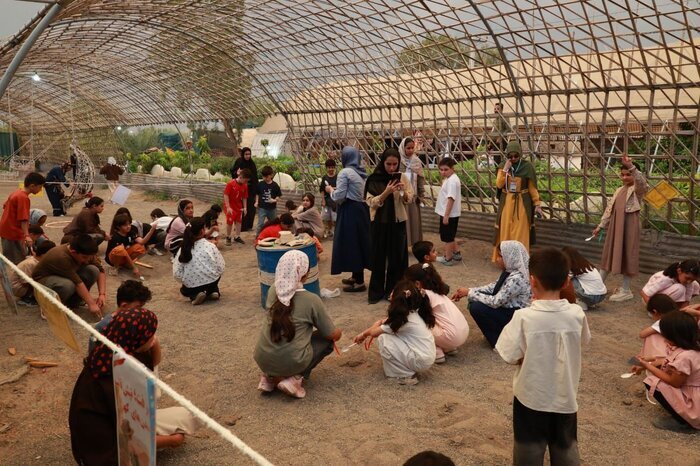
TEHRAN - A cultural and educational event in Jiroft has used child- and family-oriented tourism activities to introduce younger generations to the 5,000-year-old civilization of the Halil Rud valley and promote awareness of the importance of protecting archaeological heritage.
The event, titled “Ancient Jiroft; Child and Family Tourism,” was held at the Payandan tourism farm in Jiroft, southeastern Iran, during Iran’s Tourism Week. The program brought together children, families, cultural heritage officials and tourism and child-development activists.
Organizers used interactive and play-based activities to introduce children to the region’s archaeological and cultural heritage. One of the main activities was a simulated archaeological excavation designed to teach children the importance of protecting archaeological sites and reinforce the message that unauthorized excavation is prohibited.
Other activities included pottery workshops inspired by motifs found on ancient Jiroft vessels, painting on recreated archaeological objects, storytelling about the region’s ancient history and a photography exhibition highlighting lesser-known attractions in the area.
Children also introduced the Konar Sandal archaeological site in English, providing an educational exercise aimed at helping them become familiar with presenting their region’s heritage to international visitors.
Ziaeddin Kamali, head of Jiroft’s Cultural Heritage, Tourism and Handicrafts Department, said education was fundamental to heritage protection.
“Preserving this immense heritage is not possible without the informed participation of future generations,” he said, adding that cultural heritage should move from the pages of books into everyday life, particularly the minds of children.
Kamali said teaching children through simulated excavations could help prevent future involvement in illegal digging by helping them understand that archaeological objects are part of their identity.
He also highlighted the potential to combine agriculture and tourism in Jiroft, citing the Payandan farm as an example of integrating agricultural activities with tourism.
“We should turn Jiroft from a purely archaeological and museum-oriented destination into a living experience,” Kamali said, where families can enjoy nature and local products while learning about history and experiencing traditional crafts.
The Jiroft archaeological landscape gained international attention after floods along the Halil Rud in the early 2000s exposed previously unknown graves containing artifacts dating to the Early Bronze Age. The discoveries revealed evidence of a sophisticated civilization in the region dating to the late third millennium BC.
Konar Sandal, one of the key archaeological sites, comprises two major mounds, Konar Sandal A and B, rising about 13 and 21 meters above the surrounding plain. Excavations have revealed a substantial two-story citadel and tablets bearing an undeciphered script, adding to evidence of the region’s cultural complexity.
AM
Leave a Comment